
The Impact of Gambling Regulations on Local Economies
An analysis of how gambling laws affect economic conditions in various regions.
- Regulatory impacts
- Economic implications
- Community responses
- Future predictions
An in-depth look into Australia's pokies buy back schemes and their role in reducing gambling-related harms.
Pokies buy back represents a significant policy initiative across Australian states aimed at addressing the escalating concerns surrounding gambling addiction and its societal impacts. As awareness of gambling-related harm has grown, governments have increasingly turned to pokies buy back schemes as a mechanism to reduce the proliferation of poker machines in communities. These initiatives reflect a broader commitment to gambling reform, balancing public health objectives with the economic interests of venues that depend on gaming revenue.
Pokies buy back involves government entities purchasing poker machine licenses from operators to decrease the number of machines in circulation. The fundamental strategy is straightforward: by limiting access to poker machines, governments aim to reduce the prevalence of gambling addiction and its subsequent impacts on families and communities. These schemes represent a critical response to the challenges posed by gambling harm, particularly in regions like Victoria and New South Wales.
The primary goals of pokies buy back initiatives center on harm reduction and public health protection. By reducing gambling opportunities, these schemes seek to mitigate severe financial issues, social costs, and the devastating effects of problem gambling on individuals and families. Beyond harm minimization, these initiatives also aim to encourage venue diversification, driving establishments away from their reliance on gambling revenue and toward community-friendly business practices.
Different Australian states have adopted varying approaches to pokies buy back schemes, reflecting their unique political, economic, and social circumstances.
Victoria has pursued an ambitious reform agenda, with plans to establish an independent expert panel to develop a comprehensive license buyback scheme. The Victorian approach includes establishing a $200 million transition fund to help smaller venues move away from pokies before the full buy-back scheme is implemented. Victoria's broader gambling reform strategy also includes mandatory pre-commitment schemes, restricted load-up limits ($20), reduced jackpot limits ($500), and maximum bet limits, with a goal of achieving a pokies-free Victoria by 2035.
Exploring the state-specific approaches to pokies buy back schemes and the varying implementation strategies across Australia.
The evolution of policies and their implications for gambling harm reduction in local communities and venues.
New South Wales has taken a more measured stance. The NSW Liberal and Nationals Government introduced an optional buy-back scheme targeted at acquiring 2,000 machines from venues over five years, coupled with a transition to cashless gaming by December 31, 2028. The scheme includes interest-free loans for small and medium-sized pubs and clubs to support transition costs, a $40 million regional fund, and a $20 million small venue fund.
However, NSW's commitment to pokies reduction has faced significant setbacks. In March 2025, the NSW government cancelled a commitment to remove 9,500 pokie machines through a buyback scheme and forfeiture model that was originally planned before state elections. According to NSW Gaming Minister David Harris, the cancellation was justified on cost grounds, with government advisors estimating the buyback scheme would cost at least AU$60 million. The minister argued that "it is not the number of machines that's the issue. It's the intensity of play," suggesting that removing machines would be ineffective without addressing how people use them.
The Independent Panel on Gaming Reform in NSW recommended that any pokies buyback scheme should be voluntary and open to NSW clubs and hotels, remain simple and transparent, and price Gaming Machine Entitlements at AU$30,000 ($18,600), targeting the existing commitment of 2,000 Gaming Machine Entitlements over five years. This more measured approach reflects recognition of the complex economic relationships between governments, venues, and communities.
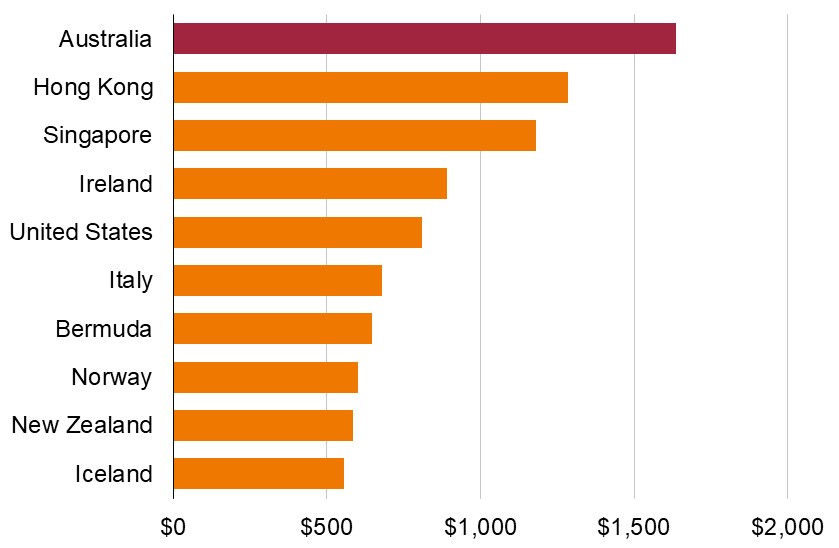
Notably, gambling losses in NSW reached AU$8.64 billion ($5.36 billion) in 2024, increasing by 6.3 percent annually despite harm minimization reforms. This concerning trend underscores that machine reduction alone may be insufficient without complementary harm reduction measures.
Beyond buyback schemes, Australian states are increasingly implementing complementary measures. Tasmania is implementing a best-in-class mandatory pre-commitment scheme with default loss limits of $100 per day, $500 per week, and $5,000 per year. Victoria and Western Australia have announced mandatory pre-commitment schemes, while Queensland will introduce such a scheme for casinos by the end of 2025.
Implementation of comprehensive buyback schemes faces substantial hurdles. Long-term contracts and the lobbying power of the gambling industry have complicated efforts to establish comprehensive buy back schemes in several states. Additionally, the establishment of effective regulatory frameworks requires careful consideration of fair compensation for venue operators, valuation methodologies, and alignment with harm reduction goals and legal compliance requirements.
The financial burden of buyback schemes represents a significant barrier. With estimated costs reaching AU$60 million or more for substantial reductions in machine numbers, governments must weigh this expenditure against alternative harm reduction investments. This cost-benefit analysis has led some policymakers to question whether machine removal is the most efficient use of limited resources, particularly when intensity of play remains a critical factor in problem gambling outcomes.
Venues relying heavily on gaming revenue often resist buyback schemes, particularly smaller pubs and clubs with limited alternative revenue streams. This resistance is compounded by concerns about regional venue viability, leading governments to establish transition funds and grants to support affected businesses.
The trajectory of pokies buy back policies in Australia suggests a gradual shift toward more nuanced, multi-faceted harm reduction approaches. Rather than pursuing aggressive machine reduction alone, states are increasingly combining buyback schemes with mandatory pre-commitment systems, cashless gaming requirements, and enhanced support services. This holistic approach recognizes that addressing gambling harm requires addressing not just the availability of machines but also how people use them.
Future implementations are increasingly emphasizing community input and local council involvement. Local communities play a significant role in influencing the implementation of pokies buy back schemes, with advocacy from community groups and local councils driving support for measures aimed at minimizing pokies in their neighborhoods and promoting healthier environments.
As states gather data on the effectiveness of their respective schemes, interstate coordination and learning will likely accelerate. The success or failure of Victoria's ambitious reforms, NSW's transition to cashless gaming, and Tasmania's pre-commitment scheme will inform future policy decisions across Australia.
Pokies buy back schemes represent an important component of Australia's evolving response to gambling-related harm. However, current evidence suggests that buyback schemes alone are insufficient for addressing the complexity of problem gambling. States are increasingly recognizing that effective reform requires comprehensive approaches combining machine reduction with mandatory pre-commitment systems, cashless gaming infrastructure, enhanced support services, and sustained community engagement.
The cancellation of NSW's ambitious machine reduction targets and the state's pivot toward cashless gaming and optional buyback schemes signal a maturation in policy thinking—one that acknowledges both the importance of addressing gambling access and the limitations of purely quantitative reduction strategies. As Australian jurisdictions continue to refine their approaches, ongoing evaluation, community input, and evidence-based policymaking will remain essential for maximizing the protective impact of these initiatives while minimizing economic disruption to communities and venues.
We are grateful to our sponsors who support initiatives aimed at reducing gambling harm and fostering community welfare.


An analysis of how gambling laws affect economic conditions in various regions.

Exploring the shift towards cashless systems and its effects on gambling behaviour.
Victoria's $200M fund supports venues in transitioning away from gambling revenue, aligning with its pokies-free target by 2035.
Faced with cost challenges, NSW shifts focus to cashless gaming instead of reducing machine numbers drastically.
Tasmania's new pre-commitment system sets benchmark loss limits to curb gambling addictions effectively.