About Aztec Achievements
The Aztec Empire remains one of history’s most formidable civilizations, renowned for its military conquests, architectural innovations, cultural richness, and economic prosperity. Their legacy includes feats in urban planning, agriculture, and education, cementing them as a dominant force in Mesoamerican history.
Military ConquestsArchitectural InnovationsCultural RichnessEconomic ProsperityEducational Systems
The Aztec Empire (c. 1345-1521) stands as one of history's most impressive civilizations, achieving remarkable success across military conquest, engineering innovation, cultural sophistication, and economic prosperity. Their dominance over Mesoamerica stemmed from a multifaceted approach that combined strategic warfare, technological advancement, and cultural refinement, creating a civilization that commanded respect and resources across vast territories.
Introduction
The topic revolves around Aztec win—the remarkable successes and achievements of the Aztec civilization. The Aztecs dominated in military, engineering, and cultural aspects, establishing one of the most powerful empires in Mesoamerica. Their legacy is marked by advanced urban planning, innovative agricultural techniques, a sophisticated education system, and a rich artistic and religious tradition.
Aztec Win in Military Strategy
Key Conquests
The Aztecs were renowned for their military prowess. Through a series of strategic conquests, they expanded their influence across much of northern Mesoamerica. Their warriors were highly trained and equipped with advanced weaponry such as the macuahuitl (a wooden sword embedded with obsidian blades), the atlatl (spear thrower), and bows and arrows. Elite warriors wore elaborate feathered and animal skin costumes to signify their rank.
Formation of the Triple Alliance
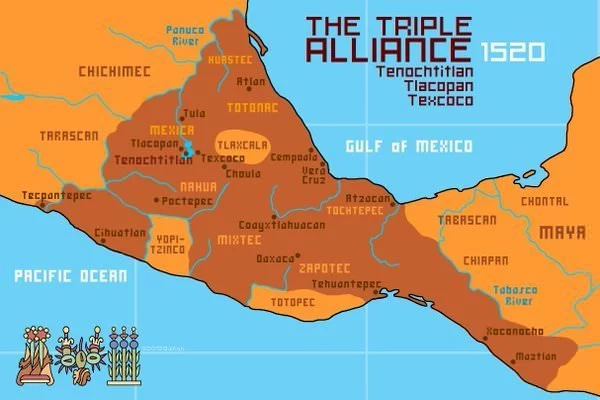
A pivotal moment in Aztec military history was the formation of the Triple Alliance in 1428 CE between Tenochtitlan, Texcoco, and Tlacopan. This alliance allowed the Aztecs to consolidate power and launch coordinated campaigns against rival city-states. Over time, Tenochtitlan emerged as the dominant partner, with its ruler becoming the supreme leader (huey tlatoani) of the empire.
Influence of Warfare on Expansion
Military strategy was central to Aztec expansion. Victories in battle led to the imposition of Aztec ideals and religion across conquered territories. Regular tributes were extracted from subjugated peoples, and captives were taken back to Tenochtitlan for ritual sacrifice. This system not only enriched the empire but also reinforced its authority and religious practices.
Aztec Win in Engineering
Urban Planning of Tenochtitlan
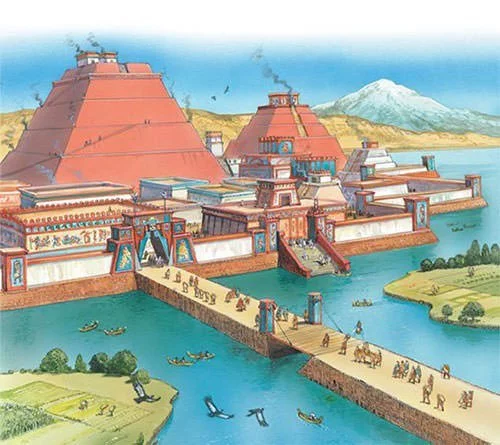
Tenochtitlan, the capital city of the Aztec Empire, was an engineering marvel. Built on an island in Lake Texcoco, it featured advanced urban planning with streets, canals, and causeways connecting the city to the mainland. The city was divided into four quarters, each crossed by streets and canals. Long causeways, raised roads, linked the island to the lakeshore, while aqueducts brought fresh water into the city. The central plaza was a sacred site used for public ceremonies and festivals, surrounded by dozens of pyramids, temples, and other buildings.
Innovative Agricultural Practices
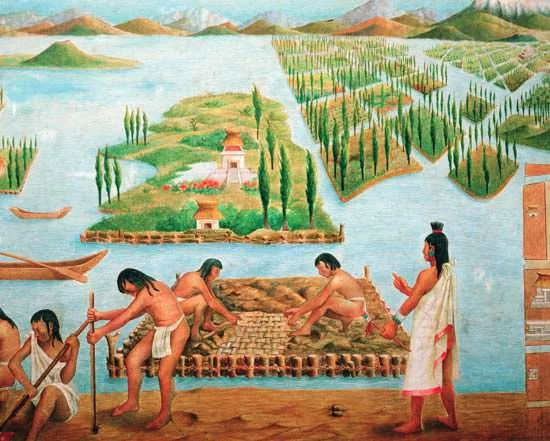
One of the most significant agricultural innovations of the Aztecs was the development of chinampas, or "floating gardens." These artificial islands were constructed on the lake's surface and used for growing crops such as beans, corn, and chili. The chinampas allowed the Aztecs to maximize agricultural productivity in a challenging environment, supporting a large population.
Aztec Influence
The Aztec's strategic approaches, cultural contributions, and infrastructural developments left a lasting impact on modern society, particularly in Mexico. Their advanced state mechanisms and artistic expressions continue to be celebrated.
Their understanding of engineering, water management, and military organization enabled them to thrive in diverse environments, influencing contemporary urban planning and agricultural practices.
- Strategic Alliances
- Feather Weaving Arts
- Religious Ceremonies
- Advanced Water Systems
Water Management Systems
The Aztecs excelled in water management, constructing aqueducts, canals, and sluice gates to control the flow of water. These systems protected the city from flooding and ensured a steady supply of fresh water for both the city and the chinampas. The intricate network of canals also facilitated transportation and trade within the city.
Aztec Win in Culture and Society
Universal Education System
The Aztecs required universal education in their empire. Both boys and girls received formal education, with schools for commoners and nobles. The curriculum included subjects such as history, religion, and practical skills. This emphasis on education contributed to the empire's administrative efficiency and cultural cohesion.
Artistic Achievements
The Aztecs were accomplished artists and architects. They produced highly skilled and sensitive art, including elaborate stone sculptures, intricate feather weaving, and beautiful pottery. The famous Calendar Stone, discovered in 1790, is a testament to their artistic and astronomical knowledge. Aztec art often used religious themes, reflecting the deep connection between art and spirituality.
Religious Practices and Their Influence
Religion played a central role in Aztec society. The Aztecs worshipped a rich pantheon of gods, including Huitzilopochtli and Quetzalcoatl. Human sacrifice was an integral part of their religious practices, believed to ensure the continued favor of the gods and the prosperity of the empire. Religious ceremonies and festivals were major events that brought the community together and reinforced social order.
Aztec Win in Economy and Trade
Trade Networks and Market Development
The Aztecs established extensive trade networks that connected their empire with distant regions. Markets in Tenochtitlan were bustling centers of commerce, where goods such as textiles, pottery, and foodstuffs were exchanged. The city's strategic location and advanced infrastructure facilitated trade and economic growth.
Economic Impact of Agricultural Innovation
The development of chinampas and other agricultural innovations had a profound impact on the Aztec economy. Increased agricultural productivity supported a growing population and provided surplus goods for trade. The economic prosperity generated by these innovations contributed to the empire's stability and expansion.
Conclusion
The Aztec win is evident in their remarkable achievements across military, engineering, culture, and economy. The Aztecs built a powerful empire through strategic military conquests, advanced urban planning, innovative agricultural practices, and a sophisticated education system. Their legacy endures in the form of architectural marvels, artistic masterpieces, and a rich cultural heritage. The Aztecs stand as a testament to the ingenuity and resilience of one of the greatest civilizations in human history.
Historical Figures Influenced
The achievements and methodologies of the Aztec civilization have had far-reaching impacts, inspiring numerous historical figures in their pursuits of knowledge, governance, and art.

Abraham Lincoln

Woodrow Wilson

Theodore Roosevelt

Thomas Jefferson
Related Articles
The Causeways of Tenochtitlan
Discover the engineering marvels of the Aztec causeways that connected Tenochtitlan to the mainland, exemplifying Aztec ingenuity in urban planning.
- Bridging City to Mainland
- Advanced Urban Design
- Flood Management
- Transport Efficiency
Building Chinampas
Explore how the Aztecs built the chinampas, floating gardens that revolutionized agriculture and supported a booming economy.
- Innovative Farming
- Sustainable Practices
- Maximized Yields
- Support for Urban Populations
Latest Discoveries
New Insights into Aztec Civilization
Recent Excavations at Tenochtitlan
2025-11-20
Archaeologists uncover new layers of Tenochtitlan's urban landscape, revealing more about the Aztec city's complexity.
Chinampa Techniques Revisited
2025-11-10
New research into Aztec agriculture offers insights into the sustainability of chinampa systems.
Discovery of Aztec Artifacts
2025-10-15
A treasure trove of Aztec sculptures and pottery provides a deeper understanding of their art and religion.