Pot Of Gold Bingo
Pot of Gold Bingo is a specialized bingo event game that operates as a hybrid between traditional bingo and instant-win gaming, designed to enhance player engagement and increase venue revenue. The game has established itself as a notable offering within the broader bingo gaming ecosystem, particularly in regulated markets.
Game Mechanics and Gameplay Structure
Core Gameplay Elements
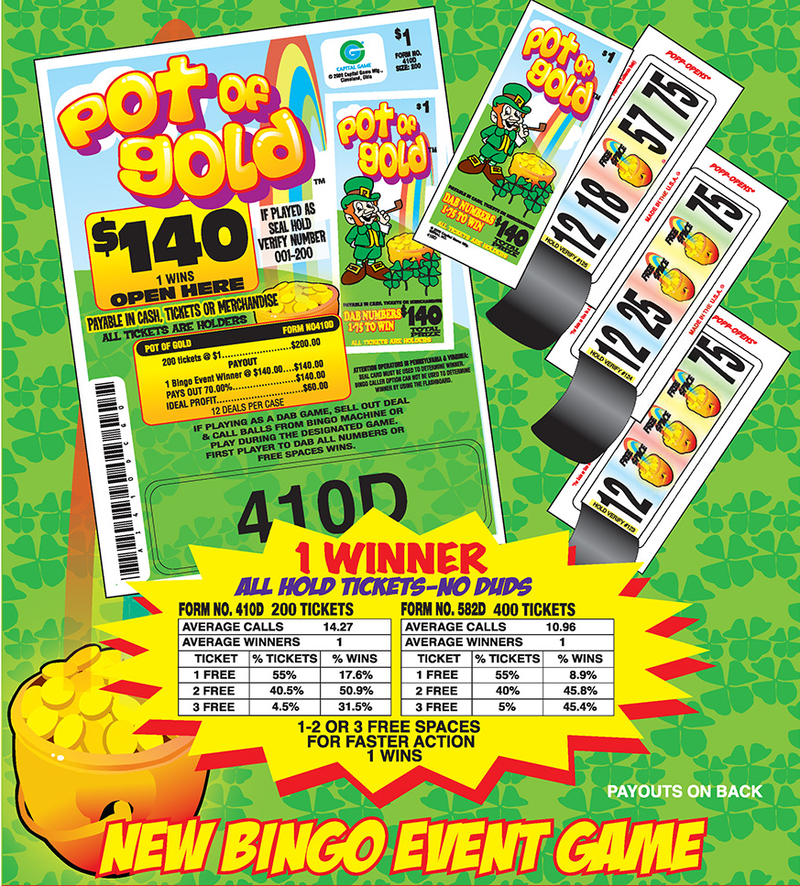
Pot of Gold functions as a 1-window bingo event game where players purchase tickets for $1.00 each. The game incorporates "HOLD" numbers ranging from B1 to B75, with a winning condition of "Dab 5 to Win". This structure combines traditional bingo number-calling with event-style gaming mechanics that appeal to both casual and regular bingo players.
Dual Play Formats
The game offers two distinct ways to play. The first integrates with designated live bingo sessions—during regular bingo calling, the first player to cover all numbers on their hold ticket wins the top prize for that deal. In the event of multiple winners, prizes are split equally among them.
The second format utilizes a seal card mechanism. The operator opens a designated window on the seal card to reveal bingo numbers that, combined with the hold numbers, determine the winning ticket. This format allows for immediate results without requiring a live bingo session, providing operational flexibility.
Industry
Market Distribution and Accessibility
Licensing and Supply Channels
Pot of Gold tickets are distributed through licensed bingo supply operations, with CT-licensed customers being a primary market segment. The tickets typically ship within 24 hours, indicating established supply chain infrastructure. Distribution channels include specialized bingo equipment suppliers such as CT Bingo Supply, which maintains inventory for rapid fulfillment.
Venue Integration
The game is offered at various bingo establishments and casinos. Suncoast Bingo, operated by Boyd Gaming, features Pot of Gold drawings with specific player requirements—participants must be present and actively playing the session to qualify as winners, and must present valid identification and a B-connected card within 30 seconds of being named a winner.
Buzz Bingo operates a community-based "Pot of Gold Jackpot" variant where players can add a Pot of Gold stamp to games like Lunch Club, Big Bite, or Late Finale Bingo for an additional £1 per two stamps. This version features a progressive jackpot that accumulates until won when a player calls a full house on any number bearing the Pot of Gold stamp.
Prize Structure and Financial Mechanics
Ticket Pricing and Payouts
Standard Pot of Gold event tickets are priced at $1.00 per play. Prize structures vary by venue and game configuration, with top prizes ranging from modest amounts to several hundred dollars depending on the specific event setup. The flexibility in prize structuring allows venues to align payouts with their operational goals and player demographics.
Progressive Jackpot Integration
In networked implementations like Buzz Bingo's version, the Pot of Gold operates as a progressive jackpot that grows from a share of ticket sales until a winning condition is met. This structure mirrors broader progressive bingo jackpot mechanics, where portions of each ticket contribute to an accumulating prize pool.
Player Engagement Mechanisms
Community Participation
Pot of Gold Bingo leverages community participation through both live event integration and instant-win formats. The requirement for players to be present during sessions encourages sustained venue attendance. The progressive jackpot variants create compelling narratives as jackpots grow visibly, incentivizing repeat play.
Operational Flexibility
The dual-format structure provides venues with operational flexibility—they can run Pot of Gold during peak bingo sessions for maximum participation or use the seal card format during slower periods to maintain consistent gaming offerings. This adaptability contributes to the game's popularity across different bingo hall environments.
Market Position and Industry Context
Pot of Gold Bingo occupies a strategic position within the event-based gaming market. It represents the evolution of traditional bingo beyond simple number-calling, incorporating psychological elements of both instant-win gaming and progressive jackpots. The game's compatibility with existing bingo infrastructure—utilizing standard B1-O75 numbering systems and integrating seamlessly into scheduled bingo sessions—facilitates adoption by established venues.
The game's availability through multiple distribution channels and its presence at major gaming venues including casino-operated bingo halls indicates sustained market demand. The pricing structure ($1.00 per play) positions it as an accessible add-on game that encourages incremental spending among existing bingo players without creating prohibitive barriers to participation.