
Navigating Cash Transactions
Insights on managing cash efficiently in the DRC.
- Strategies for safe transactions
- Understanding local currency
- Utilizing authorized banking
- Avoiding counterfeit risks
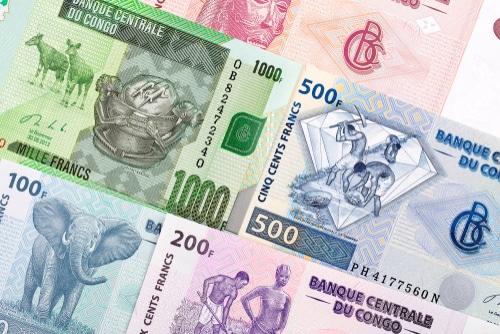
Congo cash refers to the system in the DRC where the Congolese Franc (CDF) is the official currency, supported by USD, especially in urban areas. The economy heavily relies on cash transactions.
Congo cash refers to the Congo cash system in the Democratic Republic of the Congo (DRC), where the Congolese Franc (CDF) serves as the official currency. The economy heavily relies on cash transactions, with limited reliance on electronic payments, marking it as a predominantly cash-based system. Additionally, the integration of USD within urban settings illustrates the unique dual currency system that influences everyday commerce. Understanding how Congo cash operates is essential for both residents and visitors in navigating the local economy efficiently.
The topic of Congo cash centers on the Congolese Franc (CDF), the official currency of the Democratic Republic of the Congo (DRC), and its critical role in daily transactions across the country. The DRC’s economy is predominantly cash-based, with most transactions conducted in physical currency rather than through electronic means. In addition, the US Dollar (USD) is widely accepted, especially in urban centers, creating a unique dual-currency system that shapes both local commerce and broader economic dynamics. Understanding how cash is managed, exchanged, and used in the DRC is essential for travelers, businesses, and anyone engaging with the Congolese economy.
The Congolese Franc (CDF) is the legal tender in the DRC, subdivided into 100 centimes, though centime coins are rarely used due to inflation.
First introduced in 1887 during the Congo Free State era, replacing earlier Belgian-linked currencies. After independence in 1960, the CDF remained the national currency, but economic instability led to multiple reforms. In 1997–1998, the CDF was reintroduced, replacing the Zaire (the currency under Mobutu Sese Seko) at a rate of 1,000 old francs = 1 new franc. The currency has undergone several revaluations and redesigns to combat hyperinflation and restore public confidence.
Coins include 1, 5, 10, 20, 50, 100 francs and banknotes range from 500 to 20,000 francs. Banknotes often feature prominent Congolese historical figures, cultural symbols, and natural resources.
The DRC remains a cash-based society, with most transactions—especially in rural and semi-urban areas—conducted in physical currency.
Access to digital banking and electronic payments is limited, particularly outside major cities like Kinshasa and Lubumbashi.
Urban Areas: Cash is dominant, but some businesses accept USD. Rural Areas: Cash is almost exclusively used, with barter systems sometimes supplementing currency transactions.
The US Dollar is widely accepted in urban centers, especially for larger transactions, real estate, and high-value goods.
Explore the currency exchange options and banking facilities available in the Democratic Republic of the Congo.
Learn about the challenges faced by the banking sector in offering services adapted to both CDF and USD.
The presence of USD provides a hedge against local inflation and currency volatility. However, it also contributes to dollarization, where the local currency’s role is diminished in certain sectors. The government has periodically attempted to de-dollarize the economy, mandating that taxes and certain fees be paid in CDF, but USD remains prevalent in practice.
Authorized Channels: Travelers and businesses are advised to use authorized banks and exchange offices for currency exchange to avoid counterfeiting and fraud. Informal Markets: Informal exchange (black market) exists, but it carries risks and is not recommended for large transactions.
Banking Services: Banks offer accounts in both CDF and USD, and some provide basic digital banking services. Challenges: Limited branch networks, especially in rural areas. Low penetration of electronic payment systems. Cash transactions remain the norm, even in urban banking.
Exchange Rate (Late 2025): USD/CDF: As of November 28, 2025, the exchange rate was 2,280.75 CDF per USD. Over the past 12 months, the CDF has strengthened by 20.20% against the USD, though it remains volatile. The all-time high for USD/CDF was 2,913.50 in August 2025, reflecting periods of significant depreciation. Economic Policies: Government efforts to stabilize the CDF include de-dollarization initiatives and requirements for mining companies to pay taxes in CDF. Foreign investment and commodity exports (especially minerals) influence currency stability.
Counterfeiting: Counterfeit CDF notes are a persistent issue, requiring vigilance during transactions. Inflation: High inflation has eroded the purchasing power of the CDF, making USD a preferred medium for savings and large purchases. Reliability: Cash remains the most reliable form of payment, but its value fluctuates, and access to banking services is uneven.
Congo cash—centered on the Congolese Franc and the widespread use of physical currency—plays a vital role in the daily life and economy of the Democratic Republic of the Congo. The dual-currency system, with both CDF and USD in circulation, reflects the country’s economic challenges and resilience. Understanding how cash is managed, exchanged, and used in the DRC is crucial for travelers, businesses, and anyone engaging with the Congolese market. Despite ongoing challenges such as inflation, counterfeiting, and limited digital infrastructure, cash remains the backbone of transactions in the DRC, underscoring its enduring importance in the region.
We would like to thank our sponsors for their continued support.


Insights on managing cash efficiently in the DRC.
Exploring the effects of USD and CDF in the local market.
The government has introduced new policies to support the Congolese Franc and promote its use over the US Dollar.
Authorities caution against using unauthorized exchange offices due to increased counterfeit activity.
Analysts are optimistic about economic growth in the DRC, driven by mining and foreign investment.