
The Advent Journey
Discover the spiritual preparation and anticipation during Advent, leading to the joy of Christmas.
- Advent wreath traditions
- Significance of the candles
- Spiritual reflections
- Celebrating each week
Explore the origins of Santa Claus and the tradition of gift-giving inspired by Saint Nicholas's acts of generosity.
The concept of Santa's Great Gifts is central to the magic and warmth of the holiday season. Every year, children around the world eagerly await the arrival of Santa Claus, who brings not only presents but also a sense of wonder, hope, and joy. The tradition of Santa’s gift-giving is more than a festive ritual—it is a symbol of generosity, kindness, and the spirit of Christmas.
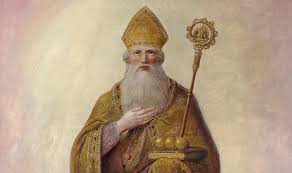
The story of Santa Claus begins with Saint Nicholas, a real historical figure born around 280 A.D. in Patara, an ancient Lycian city on the Mediterranean coast of what is now Turkey. Saint Nicholas came from wealthy Christian parents who died when he was young, leaving him a substantial inheritance. Rather than keeping his wealth for himself, Nicholas devoted his life to acts of profound generosity and compassion.
The most famous legend associated with Saint Nicholas involves three sisters from a poor family who faced a desperate fate. Unable to afford dowries, they were destined to be sold into slavery or forced into prostitution. Nicholas, moved by their plight, secretly visited their home at night and tossed gold coins through their window to provide the dowries they needed. This act of anonymous gift-giving became the cornerstone of the Saint Nicholas legend and established the archetype of the secret gift-giver that persists in modern Santa mythology.
Saint Nicholas's reputation for generosity extended beyond this single act. He became known as a protector of the vulnerable—children, prisoners, sailors, and famine victims all benefited from his compassion and the miracles attributed to his intercession. He eventually became a bishop in Myra (in modern-day Turkey) and is believed to have died on December 6, 343, at the age of 65. His feast day, December 6, became celebrated throughout Europe as a day associated with gift-giving and charity.
The transformation of Saint Nicholas into the modern Santa Claus involved the convergence of multiple cultural traditions. In continental Europe, particularly in the Netherlands, Belgium, Austria, the Czech Republic, and Germany, Saint Nicholas was traditionally portrayed as a bearded bishop in canonical robes who delivered gifts to well-behaved children on December 5th, the eve of his feast day.
The Dutch called him "Sinterklaas," a festive figure who rode a white horse and brought joy to children during the holiday season. When Dutch settlers arrived in America and established the colony of New Amsterdam, they brought these cherished traditions with them. By the early 18th century, Dutch families in New York were gathering to honor the anniversary of Nicholas's death, keeping the Sinterklaas tradition alive in their new homeland.
Gift-giving traditions have evolved over centuries, influenced by cultural, religious, and literary elements tied to Santa's legacy.
Modern practices reflect a blend of ancient customs and contemporary interpretations of generosity and kindness.
The modern conception of Santa Claus also draws from the English figure of Father Christmas, and these two characters are now popularly regarded as one and the same. Interestingly, some folklorists suggest that Santa's image also reflects influences from Odin, the Norse god depicted as a blue-hooded, cloaked, white-bearded gift-bringer who rode through the midwinter sky on his eight-footed steed Sleipnir. This mythological connection may explain certain elements of Santa's appearance and his mode of gift delivery across the winter sky.
The tradition of anonymous gift-giving evolved significantly over the centuries. In medieval times, Christian nuns in Belgium and France began depositing baskets of food and clothes anonymously at the doorsteps of the needy, establishing a practice of gift-giving on Saint Nicholas Day that formalized the spirit of secret generosity. In the Low Countries, December 6 became a significant occasion when sailors and ex-sailors would gather in harbor towns to participate in church celebrations honoring their patron saint.
A pivotal moment in the evolution of Santa Claus occurred in 1822 when the poem "A Visit from St. Nicholas," better known as "'Twas the Night Before Christmas," was published. This literary masterpiece transformed the image of Santa into the jolly, plump figure we recognize today—a benevolent gift-giver who arrives on Christmas Eve with a sleigh full of toys drawn by eight tiny reindeer. The poem's vivid imagery captured the public imagination and established the visual and narrative framework for modern Santa mythology.
By the late 1800s, artists like Thomas Nast further popularized this image, depicting Santa with rosy cheeks, twinkling eyes, and his unmistakable red suit. These artistic representations solidified the contemporary vision of Santa Claus and made him instantly recognizable across generations and cultures.
In modern times, Santa's gifts have transcended their material nature to embody deeper values. The tradition of Santa's gift-giving preserves the original spirit of Saint Nicholas—the belief that generosity, compassion, and acts of kindness bring joy and meaning to the world. When parents give gifts "from Santa," they are participating in a centuries-old ritual that teaches children about the virtue of giving without expectation of recognition.
Santa's gifts represent more than toys and material possessions; they symbolize the unconditional love and care that adults extend to the young. This tradition reinforces the notion that true wealth lies in generosity and that the greatest gifts often come in unexpected forms—whether through the kindness of a stranger, the sacrifice of a loved one, or the magic of believing in something greater than ourselves.
The enduring appeal of Santa's great gifts lies in their connection to fundamental human values. The legend preserves the memory of a real person who dedicated his life to helping others and continues to inspire acts of charity and kindness. In celebrating Santa, families worldwide participate in a tradition that honors generosity, rewards goodness, and creates cherished memories.
Santa's great gifts represent a remarkable cultural evolution spanning nearly two thousand years, from the acts of a generous fourth-century bishop to a global symbol of Christmas magic. The tradition connects us to Saint Nicholas's original mission of compassion and charitable giving while adapting to reflect each generation's values and imagination. Through Santa's gifts, the world continues to celebrate and practice the virtues of generosity, kindness, and unconditional love—the same virtues that inspired a humble bishop in ancient Turkey to secretly provide dowries for three desperate sisters. In this way, every gift given in Santa's name carries forward a legacy of genuine human goodness and the transformative power of giving.
We thank our sponsors for their support, helping us spread the message of generosity during the holiday season.




Discover the spiritual preparation and anticipation during Advent, leading to the joy of Christmas.

Find peace and contemplation during the busy holiday season with guided reflections.
Experience the magic as Santa's Workshop opens its doors to families for the holiday season, offering interactive and joyful activities.
Join us for a vibrant display of holiday lights and community festivities, celebrating the spirit of the season in dazzling style.
Gather with friends and family to spread joy throughout the neighborhood through the timeless tradition of Christmas caroling.