
Online Payment Systems
Explore the evolution and trends in online payment systems.
- Secure transactions
- Convenience and speed
- Global accessibility
- Integration with digital wallets
PokerStars remains the largest real money online poker platform, known for its market leadership and innovation in gaming.
PokerStars stands as the dominant force in the global online poker landscape, commanding unparalleled market presence and player loyalty. When evaluating pokerstars reviews, the platform consistently emerges as the industry benchmark against which other operators are measured. As the largest real money online poker site in the world, PokerStars controls over two-thirds of the total online poker market, establishing itself as the undisputed leader in digital poker gaming. The platform's reputation is built on decades of operational excellence, regulatory compliance, and continuous innovation in gaming offerings.
PokerStars fundamentally transformed the online poker industry through pivotal moments in gambling history. The platform gained worldwide recognition when it produced the 2003 World Series of Poker (WSOP) champion, Chris Moneymaker, who became the first person to achieve world champion status by qualifying through an online poker site. This historic achievement, known as the "Moneymaker effect," catalyzed the poker boom of the mid-2000s, permanently changing how the world perceives online poker legitimacy.
The platform's market leadership became absolute following the 2006 Unlawful Internet Gambling Enforcement Act. While many competitors, including PartyPoker, suspended operations for U.S. players, PokerStars continued servicing American customers, allowing it to overtake PartyPoker as the world's largest online poker room. This strategic positioning during regulatory upheaval solidified PokerStars' dominance that persists today.
In May 2020, PokerStars was acquired by Flutter Entertainment, the owner of Irish gambling company Paddy Power, transitioning from private ownership under The Stars Group. Prior to this acquisition, financial analysts estimated PokerStars' market value at approximately USD 2 billion in 2006, positioning it among the world's largest privately held gambling companies.
The global online poker market demonstrates robust growth trajectories. The online poker market was valued at USD 4.07 billion in 2024 and is expected to reach USD 9.00 billion by 2032, growing at a CAGR of 10.48% from 2025-2032. PokerStars maintains its commanding share within this expanding ecosystem, competing alongside other major players including GGPoker, the 888 Group, PartyPoker, and Ignition Casino.
PokerStars has established multiple world records demonstrating its technological infrastructure and player-drawing capacity. In December 2009, the platform set the world record for the biggest online tournament with 149,196 entrants in a $1 buy-in event. The platform subsequently broke this record in December 2011, hosting 200,000 players in a $1 buy-in tournament featuring a $50,000 first prize. These tournaments showcase PokerStars' ability to handle unprecedented player volumes while maintaining platform stability.
The online poker market is growing, expected to reach USD 9 billion by 2032.
North America and Europe are key markets for development.
PokerStars has established significant dominance in poker content streaming and viewership. The platform commands an estimated 66% of poker viewers tuning into live poker content streaming, representing industry-leading market share in this critical engagement channel. This dominance reflects the platform's commitment to making poker entertainment accessible to both casual viewers and serious players.
The platform offers comprehensive poker variants catering to diverse player preferences. Texas Hold'em dominates online poker with 55% market revenue share due to its global popularity and simple rules, with PokerStars providing robust offerings in this variant. Beyond traditional games, PokerStars has innovated with exclusive formats—for example, the company launched its Spin & Go variant tailored specifically for the Italian market, demonstrating commitment to localized gaming experiences.
Texas Hold'em remains the cornerstone of PokerStars' gaming portfolio, with its 55% revenue dominance reflecting accessibility for beginners while maintaining strategic depth for professionals. The platform also supports Omaha, 7-Card Stud, and numerous other poker variants, ensuring players of all experience levels find suitable games.
PokerStars maintains consistent player traffic across multiple time zones, with peak playing times typically occurring during evening hours in major markets. The platform hosts regular tournament schedules including daily tournaments, weekly features, and monthly championship events. The platform's ability to attract 200,000+ players to single tournaments demonstrates its unmatched capacity to generate player volume.
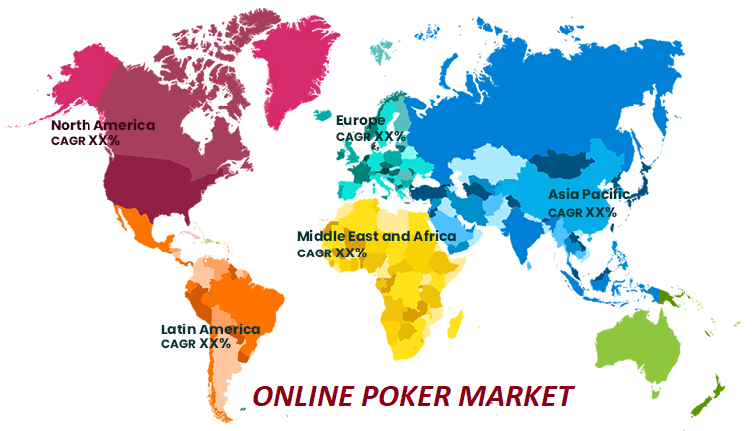
The U.S. online poker market demonstrates significant growth potential, valued at USD 0.85 billion in 2024 and projected to reach USD 1.85 billion by 2032, growing at a CAGR of 10.25% from 2025-2032. PokerStars' strong presence in North America benefits from increasing state-level legalization, improved regulatory frameworks, and rising digital payment adoption. North America dominated the online poker market with over 21.0% share in 2024.
Europe represents the dominant global region with 32% revenue share in 2024, driven by well-established gambling culture, robust regulatory frameworks, and widespread internet access. The United Kingdom leads European online poker markets due to its regulated environment, high internet penetration, and strong gaming culture. PokerStars maintains strong market presence throughout Europe, particularly in countries like UK, France, and Germany where mature, legally-clarified markets support substantial user bases.
Asia-Pacific emerges as the fastest-growing region, projected to expand at 12.65% CAGR from 2025-2032. Markets in India, China, and Southeast Asia demonstrate increased acceptance of digital gaming as governments ease regulations and platforms localize offerings. This region represents immense untapped potential for PokerStars' international expansion strategy.
PokerStars operates under stringent regulatory oversight and implements comprehensive security measures to protect player information and funds. The platform's acquisition by Flutter Entertainment, a publicly-listed company, subjects it to institutional-grade compliance frameworks and audit procedures. The platform's longevity—operating successfully for multiple decades through various regulatory environments—demonstrates consistent commitment to security standards, fair play algorithms, and responsible gambling protocols.
The online poker industry experiences significant growth through cross-platform interoperability, allowing users to seamlessly switch between devices without losing progress or access. PokerStars supports this functionality, enabling players to access their accounts across desktop, mobile, and tablet platforms. Mobile poker applications represent a critical growth driver, with rising smartphone adoption in markets like Asia-Pacific contributing to platform accessibility.
The global online poker market features major competitors including GGPoker, the 888 Group, PartyPoker, Ignition Casino, Tencent, Playtika, Zynga Inc., and various regional operators. Despite this competition, PokerStars maintains unmatched market dominance through superior player traffic, content generation, and regulatory compliance. Key competitors pursue differentiation through cutting-edge game formats, localized features, and strict regulatory adherence.
The online poker industry demonstrates exceptional long-term growth prospects. The global online poker market was valued at USD 3.86 billion in 2024 and is projected to reach USD 6.90 billion by 2030, growing at a CAGR of 10.2%. Alternative projections indicate even more robust expansion, with some market analyses forecasting USD 112.05 billion market valuation in 2024 reaching USD 415.74 billion by 2034, representing 14.01% CAGR.
Growth drivers include regulatory progress across North America, technological innovations like mobile apps and cryptocurrency integration, expanding internet penetration in emerging markets, and rising smartphone adoption among younger demographics. Player retention remains critical for operators maintaining solid growth levels following pandemic-era expansion that attracted up to 255% increase in first-time players.
PokerStars maintains unparalleled prominence as the world's largest real money online poker platform, controlling over two-thirds of the global online poker market. The platform's dominance reflects decades of operational excellence, technological innovation, regulatory compliance, and player-centric service delivery. When examining pokerstars reviews, the platform consistently demonstrates superior player traffic, content offerings, tournament infrastructure, and mobile accessibility compared to competitors.
The platform's position strengthens amid favorable market dynamics, with the global online poker market expanding from USD 4.07 billion in 2024 to projected valuations exceeding USD 9 billion by 2032. PokerStars' strategic investments in localized gaming experiences, streaming content dominance, and cross-platform functionality position it to capture disproportionate share of this expanding market. For players evaluating online poker platforms, PokerStars' combination of market leadership, regulatory compliance, player traffic volume, and comprehensive game selection establishes it as the industry standard against which alternative platforms are measured.
We are proudly sponsored by leading payment solutions.


Explore the evolution and trends in online payment systems.

Understand how digital communication is reshaping industries.
PokerStars announces new partnerships to enhance its presence in emerging markets.
Exploring the technological advancements in online poker that are setting new standards.
A detailed analysis of recent regulatory changes affecting the online poker landscape.